Browser fingerprinting field guides
Explore browser observations, audio and graphics techniques, cookies, trusted integration, open-source options and matching errors.
Evidence, implementation questions and buying trade-offs for teams evaluating application protection.
Latest guides
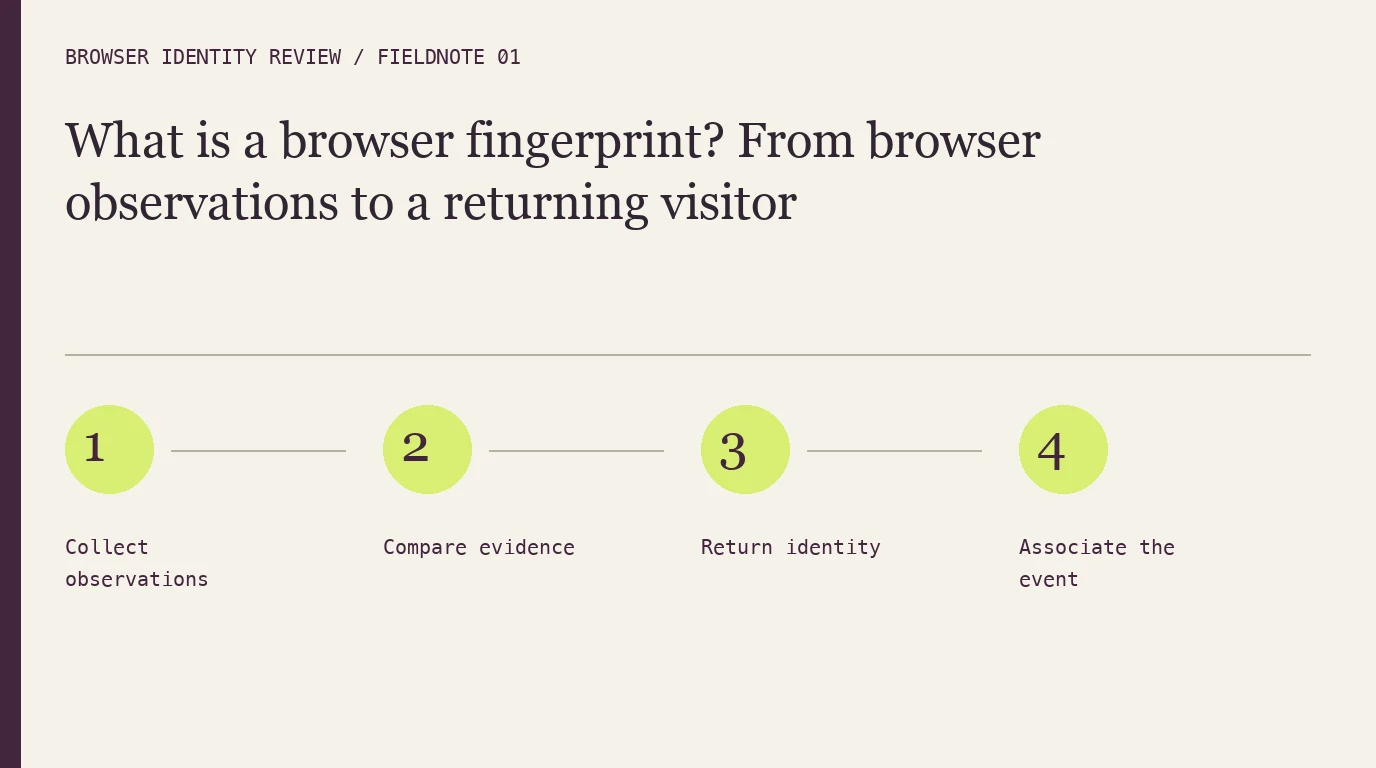
What is a browser fingerprint? From browser observations to a returning visitor
Understand browser fingerprints, matching and visitor identity. Separate a unique hash from persistent recognition and a verified account or risk decision.
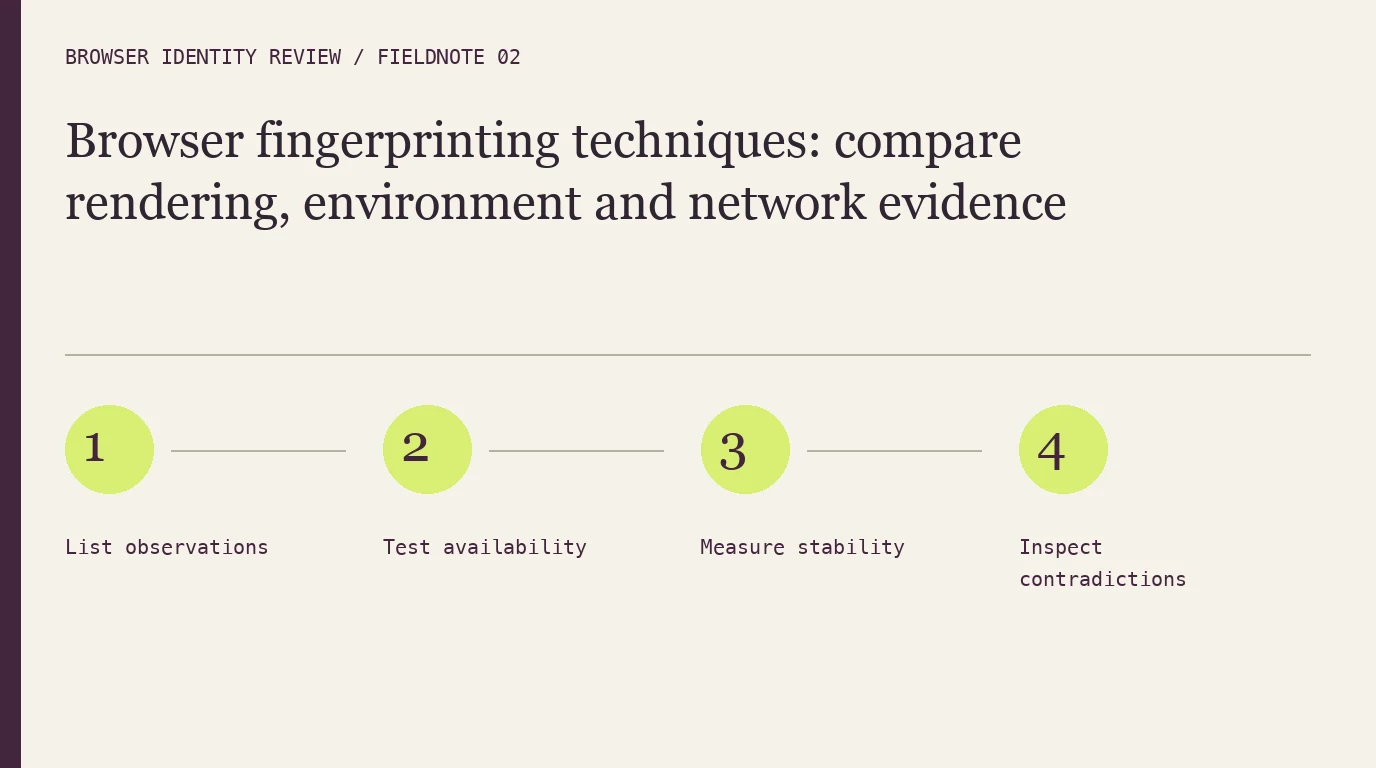
Browser fingerprinting techniques: compare rendering, environment and network evidence
Compare browser fingerprinting techniques by observation, stability and failure behavior. Build a useful evaluation matrix without confusing signal count with identity.
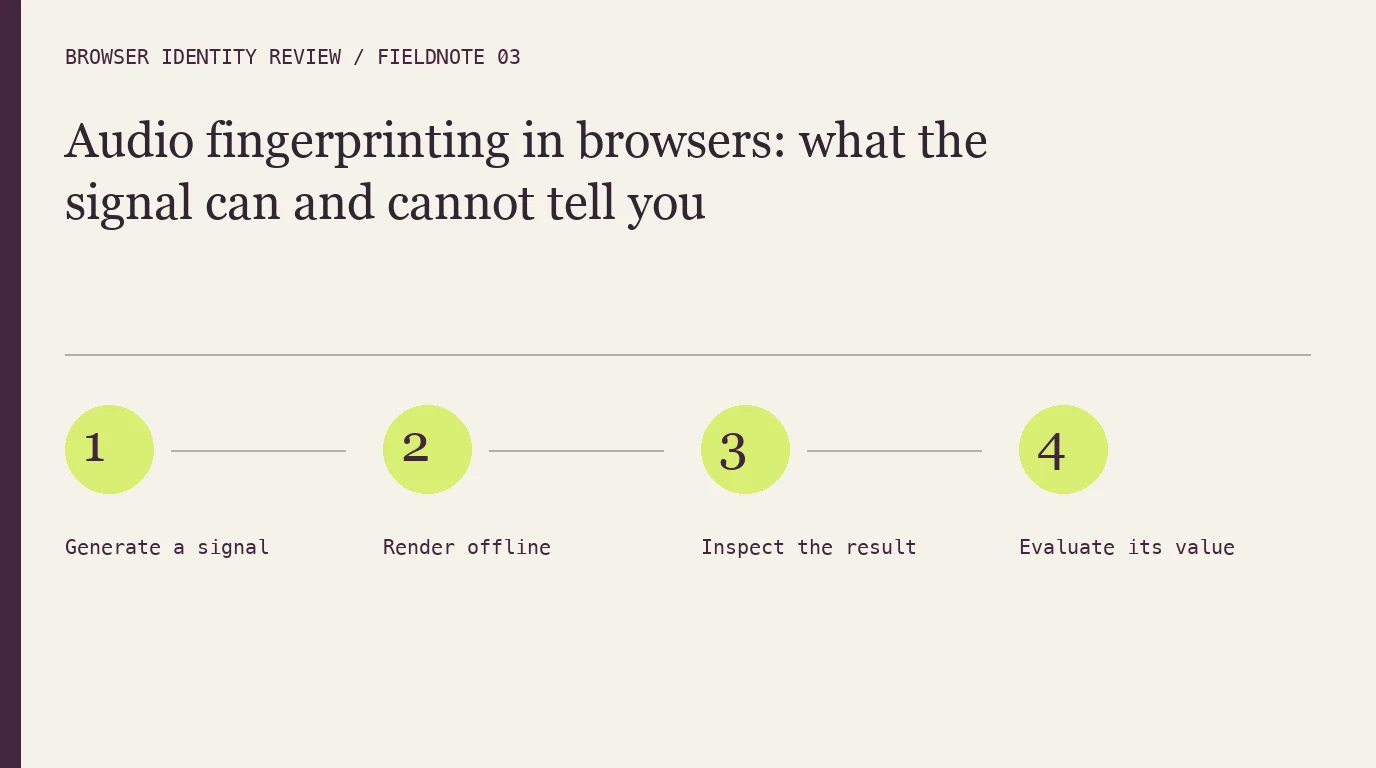
Audio fingerprinting in browsers: what the signal can and cannot tell you
Learn how browser audio fingerprinting differs from song recognition. Evaluate an audio-processing signal as part of identity evidence rather than a standalone proof.
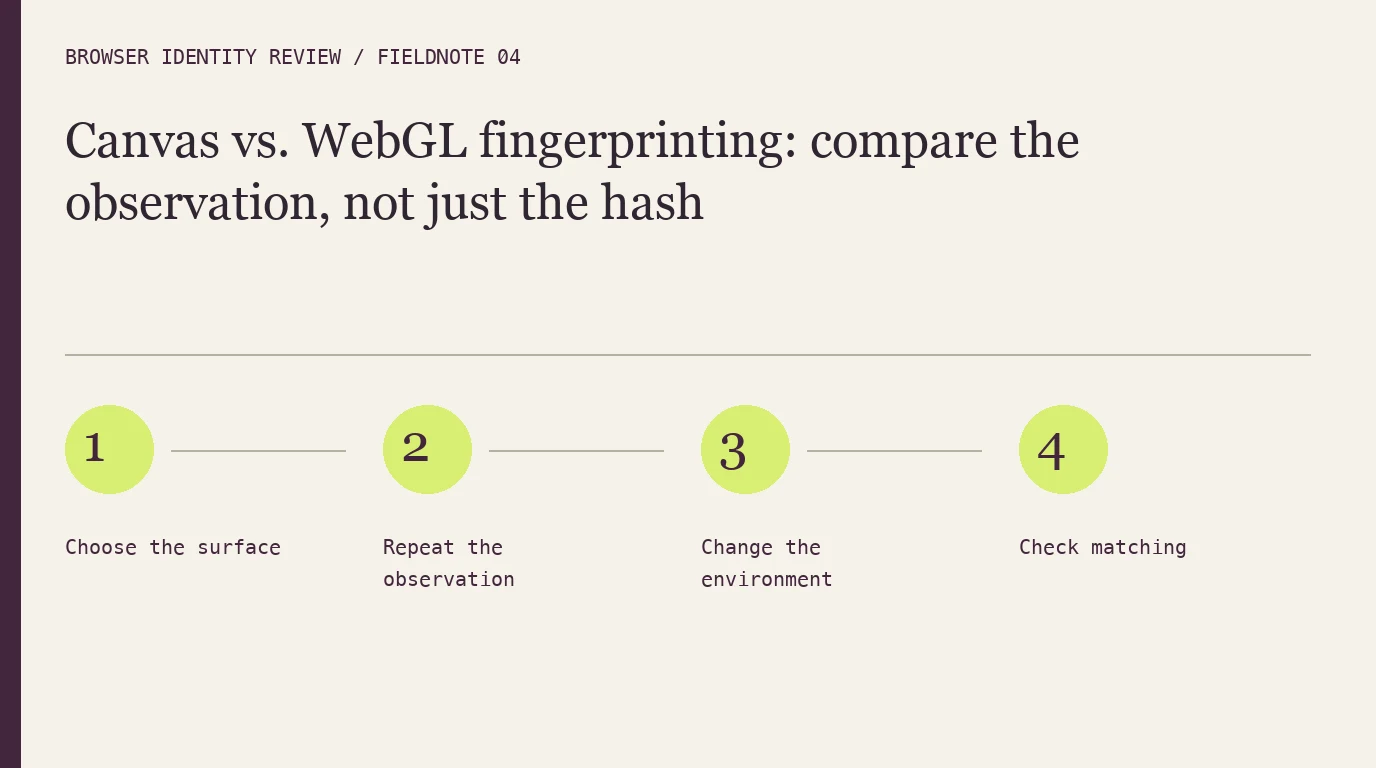
Canvas vs. WebGL fingerprinting: compare the observation, not just the hash
Compare canvas and WebGL fingerprinting, browser changes and signal availability. A practical evaluation guide for choosing a browser identity API.
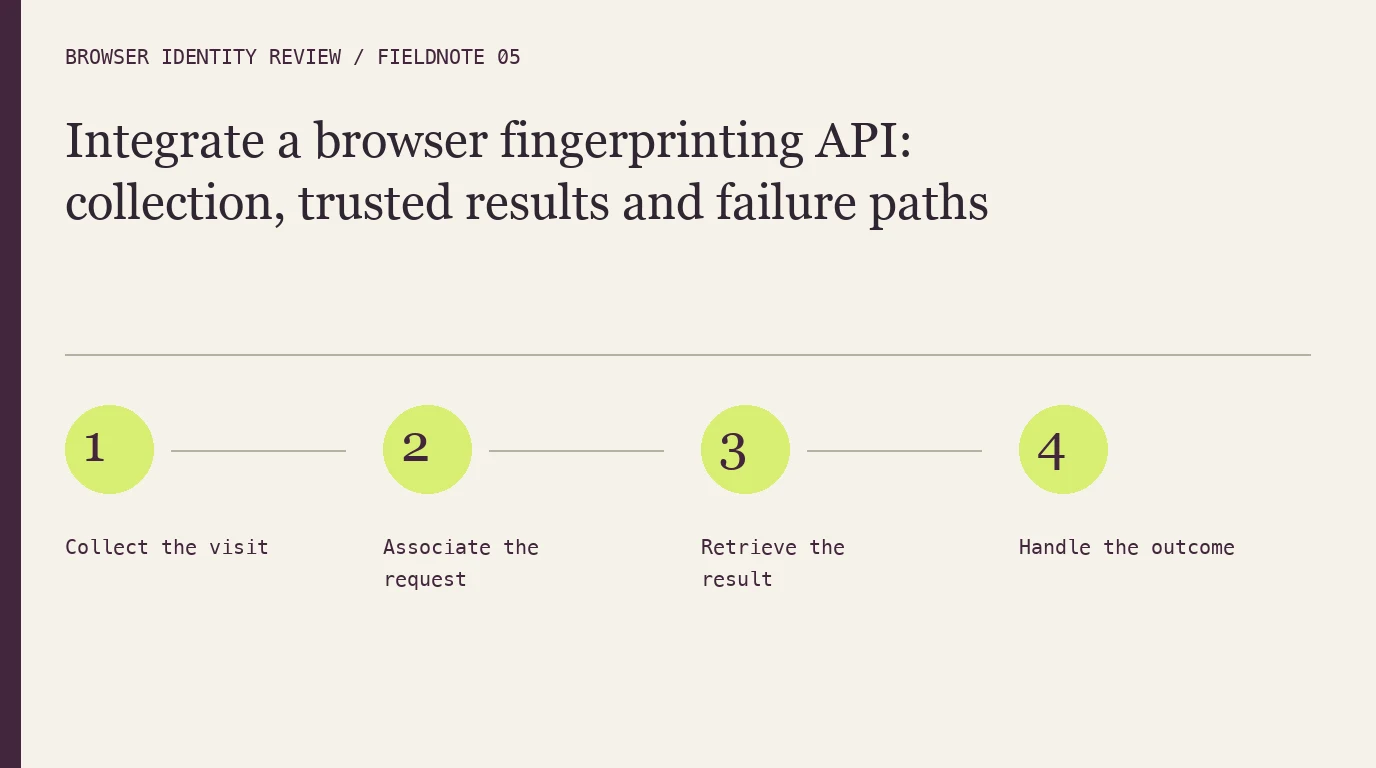
Integrate a browser fingerprinting API: collection, trusted results and failure paths
Connect browser collection to a trusted server result and protected account action. Verify event association, retries, missing collection and credential handling.
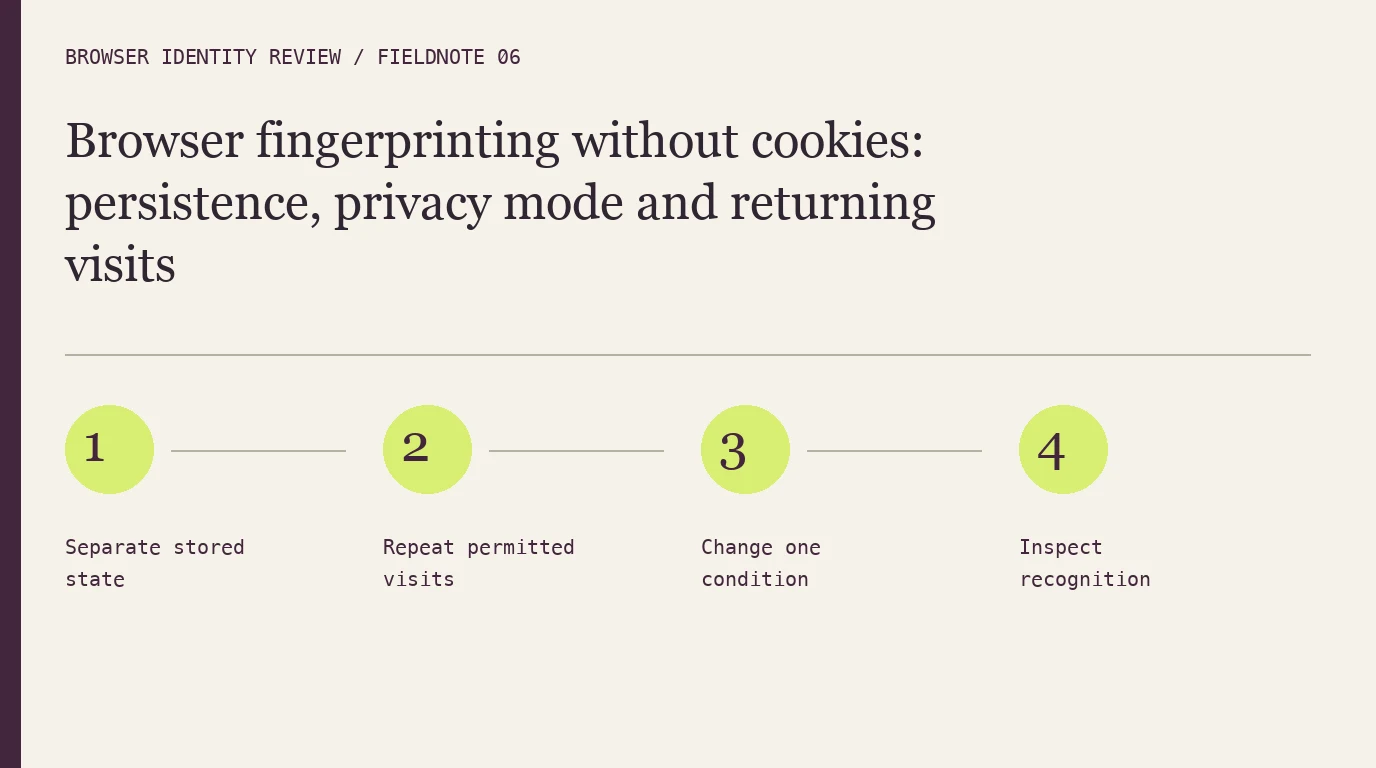
Browser fingerprinting without cookies: persistence, privacy mode and returning visits
Evaluate returning-browser recognition after storage resets and privacy-mode changes. Separate collection coverage, matching and account identity.
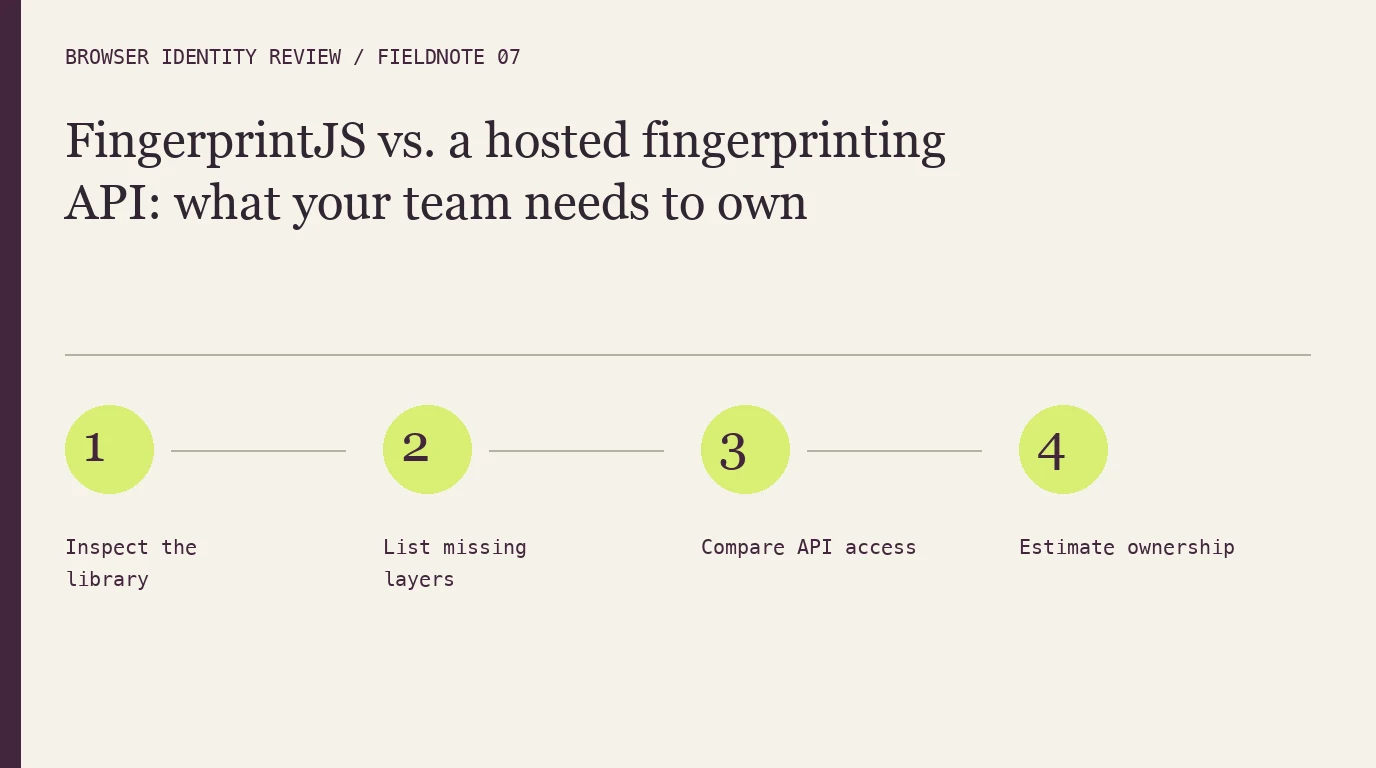
FingerprintJS vs. a hosted fingerprinting API: what your team needs to own
Compare open-source browser collection with hosted matching, risk context and operational support. Include integrity, maintenance, evaluation and usage costs.
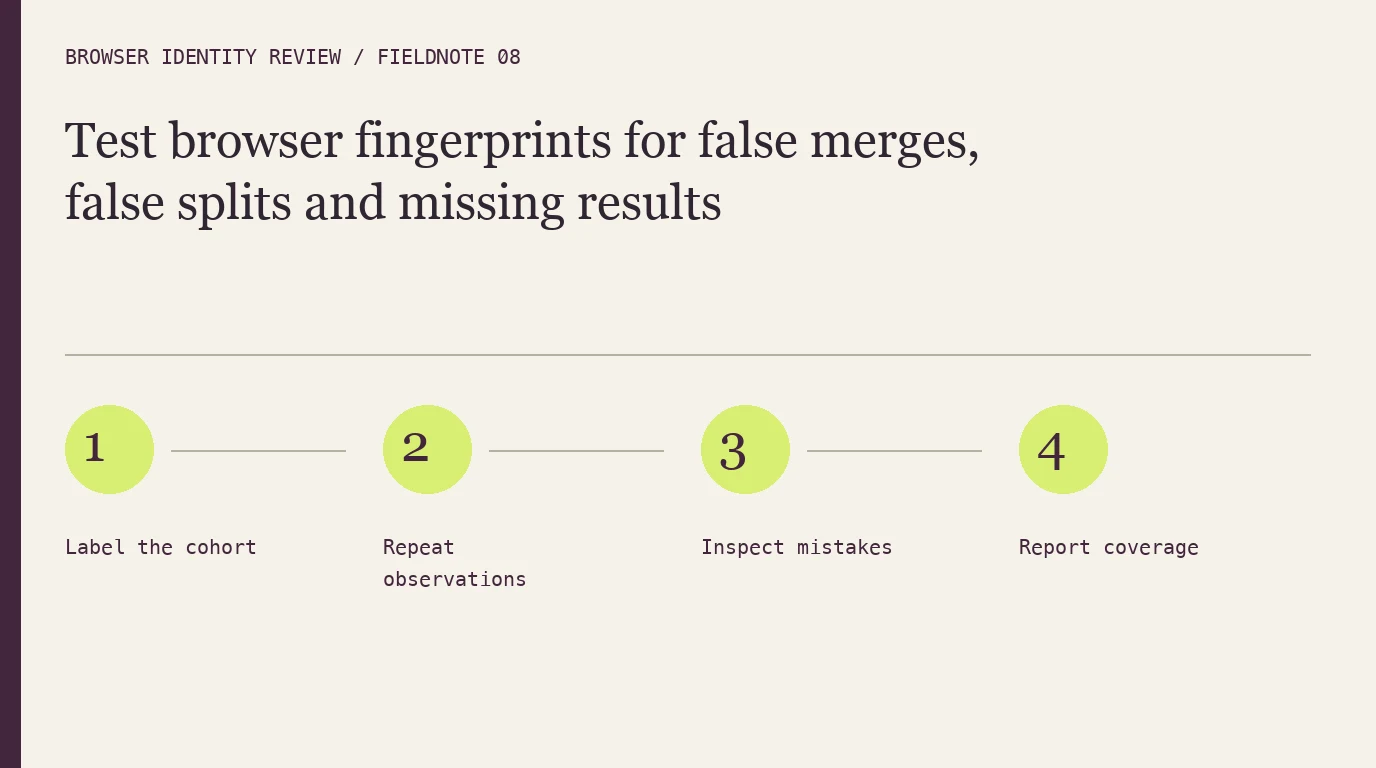
Test browser fingerprints for false merges, false splits and missing results
Measure browser recognition mistakes with known labels and explicit denominators. Separate incorrect joins, unnecessary splits and unavailable collection.
Explore checkers, demos and evaluation routes →
Summarize this page with
Practical research guides
Choose a browser API around its trusted outputs
Compare browser fingerprinting APIs and libraries by collection, trusted matching, account context, failure handling and the operating work your team must own.
Browser fingerprinting techniques: compare rendering, environment and network evidence
Compare browser fingerprinting techniques by observation, stability and failure behavior. Build a useful evaluation matrix without confusing signal count with identity.
Network and bot evidence in a browser API integration
Design network and bot API handling around trusted IP input, result freshness, challenge verification and explicit responses to missing or replayed evidence.
Browser API account links, authentication and recovery
Use browser API evidence in authentication, recovery and linked-account review while preserving the difference between an environment match and owner control.
Browser API evidence for benefits and attribution
Connect browser evidence to trial eligibility, promotion redemptions, referral qualification and attribution without replacing durable server-side value records.
Browser API evidence in commerce and specialist workflows
Preserve original browser evidence with commerce events and compare the payment, claim, identity and specialist records needed beyond an identifier or risk result.